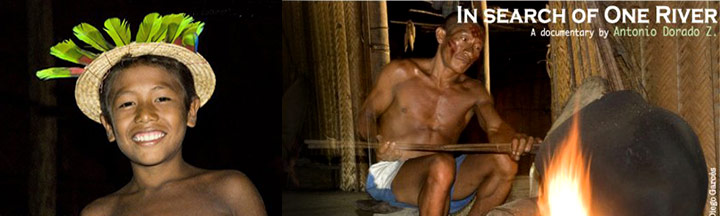
Production Update — Return from the Apaporis
March 22, 2008
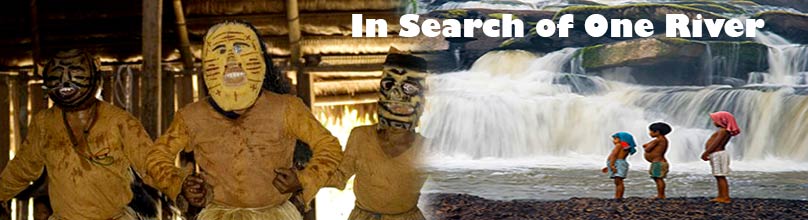
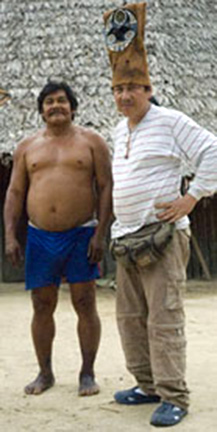
We visited places which do not appear on maps. Places like Buenos Aires, a settlement located on the banks of the Canarari river and populated by Cubeos, Baras, Barasanos and Taivanos. On the river banks of the Apaporis, we visited the Indian village of Gustavo Pachacuari, captain of the Jirijirimo Union, a settlement which is custodian of the beautiful torrents of the Jirijirimo. This is considered to be one of the most beautiful places in the world.There we attended a Yagé ritual, with dances and music of the Cabiyarí, a legendary tribe recognized for the wisdom of its medicine men and for the anthropophagic customs of their close relatives. After two days in canoe, we visited the Playa where captain Rondón Tanimuca with his family assisted in showing us the Dance of the Doll, the mask dance which had captivated Schultes so much in his trips through South America. Upon seeing photos of the Schultes expedition, a 90-year-old Tanimucan remembered the professor and recognized two of his deceased brothers. We recorded mythologies which recognize the particular ways of seeing and thinking of the indigenous people and settlers which populate the Amazon territories today.
There are memories related by payès (medicine men) who, when confronting illnesses, prayers and spells, reveal their conception of the world.Guided by Professor Schultes’ research, we traced and recorded with a high contrast video, unique and events little known to Western vision, such as the preparation of the curare for hunting and the preparation of coca powder for the mambeo*. We also recorded the preparation of dupa, extracted from Virola, one of the strongest secret psychotropics in the world, prohibited for many decades by the missionaries since its effects confuse reasoning more radically than yagé.
Richard Schultes — The Economist Obituary
March 22, 2008
Richard Evans Schultes, jungle botanist, died on April 10th, aged 86
In an account by Richard Schultes of his experiences among the Indians of southern Mexico he described a mushroom, previously unknown outside the region, used to create hallucinations. The account was mainly academic in style; nevertheless it excited a writer who went to the region and sampled the mushroom. His report was published in Life magazine in 1957 under the title “Seeking the Magic Mushrooms”. Thus the “magic mushroom” came to the United States, to be promoted among others by Timothy Leary, one of the high priests of American drug culture of the 1960s, and still remembered for his recipe for supine living, “Turn on, tune in, drop out”.
Although Mr Schultes never expected his botanical discoveries to affect, however indirectly, American social behaviour, he did not criticise Leary and his weird followers for their use of drugs. He merely expressed his disappointment that Leary had not spelt correctly the Latin names of plants from which their drugs were derived.
But Mr Schultes was sad that the public attention given to their hallucinogenic effects distracted from the value of plants as a source of medicines. After his adventure in Mexico he spent many years among tribespeople along the Amazon river. He collected thousands of previously unrecorded plants and reckoned that some 2,000 had medical value. Many more, he believed, were waiting in the jungle to benefit humanity. He liked to talk about curare. For many years it had been known as a powerful, but short term, poison on darts and arrows used by Amazonian natives. Mr Schultes traced the plants that curare came from. They yielded a substance now used as a muscle relaxant in surgery.
He inevitably became concerned that the Amazonian jungle and its inhabitants were disappearing alarmingly quickly. Around 100 tribes have become extinct in Brazil alone in the past few decades. As the tribespeople disappear, so does their knowledge. Mr Schultes saw it as his job “to salvage some of the native medico-botanical lore” before it was lost. Perhaps, he said, the cure for cancer “may come from the witch-doctor’s knowledge of plants”.
His orchid
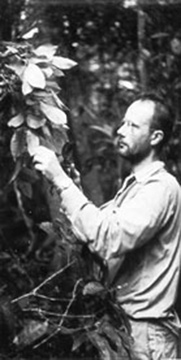
Richard Schultes’s parents were immigrants from Germany. His father was a plumber in Boston. Young Richard won a scholarship to Harvard, the first member of his family to go to university. In 1941 “as a young botanist, armed with a bright, new doctor’s degree”, as Mr Schultes described himself, he was sent by Harvard on a trip to the Amazon to study medicinal, narcotic and poisonous plants. On his first day in the jungle he found a previously unrecorded orchid. He sent it back to Harvard where it was called Pachyphllum schultesii, the first of many plants attached to his name. He was due to return after a few months but stayed in Amazonia for 14 years. During the second world war he was told to remain in the jungle to look for sources of natural rubber for the United States to replace Asian plantations lost to the Japanese.
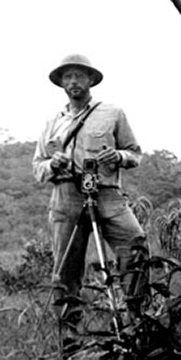
Mr Schultes sought to travel simply. His kit is a reproach to overloaded backpackers. He carried a single change of clothing, and little food: he ate the same as his native hosts. He did have a canoe, but it was light enough to carry unaided, and anyway the natives were usually happy to lend a hand. Heavy boots, he found, were usually unnecessary because jungle snakes generally struck at the neck. A pith helmet, though, he found indispensable in the rainforest. This made Mr Schultes resemble an explorer of the Victorian era, which in some ways he was. One of his heroes was Richard Spruce, a 19th-century British naturalist who also explored the Amazon region.
Like the Victorians, Mr Schultes had an unquenchable curiosity that went beyond his speciality. He wrote about the use of hallucinogens in tribespeople’s religious ceremonies. Shamans, medical men, under the influence of hallucinogens believed that they acquired supernatural powers enabling them to cure illness, locate lost articles, affect fertility and control the weather. Mr Schultes saw a connection with stories of European witches who used potions that enabled them to fly. “Flying” was an experience claimed by some of Leary’s followers. Mr Schultes’s Christianity seems to have remained untouched, but he accepted that to Indians throughout the Americas some plants are sacred. One of his books is called “Where the Gods Reign”.
Back from the Amazon with extraordinary tales to tell, Richard Schultes remained at Harvard as a teacher until he retired in his 70s. Students remember his prowess with a blowpipe that he kept in his laboratory. Each year he returned to the Amazon to collect more plants. He received numerous honours. A chunk of Amazonia preserved by the Colombian government is called Sector Schultes. He edited a journal called Economic Botany, covering a science of which he was a pioneer. Mr Schultes remained a modest man. A reporter, awed by his reputation as the world’s top authority on ethnobotany, asked how he should be described. “Just a jungle botanist,” said Richard Schultes.
This obituary appeared in The Economist (London), 2001-05-05, p.88.
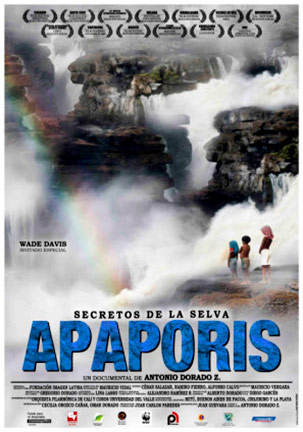
Wade Davis’ book One River is inspiration for Colombian documentary on Richard Evans Schultes
March 21, 2008
Wade Davis’ book One River is inspiration for Colombian documentary on the knowledge about plants and states of being in the Amazon and Richard Evans Schultes work in the Colombian Amazon.
Amazon.com
Best known for The Serpent and the Rainbow, Wade Davis is an ethnobotanist interested in the native uses of plants, especially psychotropics. He finds many such plants in the travels he recounts in One River, especially coca and curare. (The first, famously, is a curse in the First World but is a necessity in the Andes, where it promotes the digestion of many kinds of food plants.) Framing Davis’s narrative is an account of the dangerous World War II-era Amazonian expeditions undertaken by his mentor, Harvard biologist Richard Evans Schultes. Davis describes a few hair-raising encounters of his own, making this a fine book of scientific adventure.
From Publishers Weekly
The prodigious biological and cultural riches of the vast Amazon rain forest are being lost at a horrendous rate, according to the author, often without yielding their secrets to the Western world. During his years in the South American jungle, ethnobotanist Davis (The Serpent and the Rainbow) has done much to preserve some of these treasures. He tells two entwined tales here?his own explorations in the ’70s and those of his mentor, the great Harvard ethnobotanist Richard Evans Schultes, beginning in the ’30s. Both men have been particularly interested in the psychoactive and medicinal properties of the plants of the Amazon basin and approach their subject with a reverence for the cultural context in which the plants are used. The contrasting experiences of two explorers, a mere generation apart, starkly demonstrates how much has already been destroyed in the rain forest. Although Schultes probably knew more about Amazonian plants than any Western scientist, he was constantly learning of new ones and new uses for them from native experts. Davis graphically describes the brutal clash of cultures from Columbian times to the present, often so devastating for indigenous peoples, that has defined this region. At times humorous, at times depressing, this is a consistently enlightening and thought-provoking study. Photos not seen by PW.
Copyright 1996 Reed Business Information, Inc. –This text refers to an out of print or unavailable edition of this title.
Richard Schultes — The New York Times Obituary
March 21, 2008

By JONATHAN KANDELL
Published: April 13, 2001, New York Times
Richard Evans Schultes, a swashbuckling scientist and influential Harvard University educator who was widely considered the preeminent authority on hallucinogenic and medicinal plants, died on Tuesday in Boston. He was 86 and lived in Waltham, a Boston suburb.
Dr. Schultes (pronounced SHULL-tees) was often called the father of ethnobotany, the field that studies the relationship between native cultures and their use of plants. Over decades of research, mainly in Colombia’s Amazon region, he documented the use of more than 2,000 medicinal plants among Indians of a dozen tribes, many of whom had never seen a white man before.
”I do not believe in hostile Indians,” Dr. Schultes was quoted as saying in a 1992 article about him in The New Yorker by E. J. Kahn Jr. ”All that is required to bring out their gentlemanliness is reciprocal gentlemanliness.”
Tall, muscular, wearing a pith helmet, he hiked and paddled through Amazonia for months at a time. He collected more than 24,000 plant specimens. More than 120 species bear his name, as does a 2.2 million-acre tract of protected rain forest in Colombia, Sector Schultes, which the government there set aside in 1986.
”The last of the great plant explorers in the Victorian tradition,” was the way one of his former students, Wade Davis, described him in his 1985 best-selling book, ”The Serpent and the Rainbow” (Simon & Schuster).
But more than a real-life Indiana Jones, Dr. Schultes was a pioneering conservationist who raised alarms in the 1960’s — long before environmentalism became a worldwide concern — that the rain forests and their native cultures were in danger of disappearing under the onslaught of modern industry and agriculture. He reminded his Harvard students that more than 90 tribes had become extinct in Brazil alone over the first three-quarters of the 20th century.
”He believed ours would be the last generation fortunate enough to be able to live and work among these tribes as he had,” wrote one of Dr. Schultes’s disciples, Mark J. Plotkin, in ”Tales of a Shaman’s Apprentice,” (Viking, 1993), ”to experience their traditional way of life firsthand, and to record their vast ethnobotanical knowledge before the plant species — or the people who used them — succumbed to the march of progress.”
Dr. Schultes’s research into plants that produced hallucinogens like peyote and ayahuasca made some of his books cult favorites among youthful drug experimenters in the 1960’s. His findings also influenced cultural icons like Aldous Huxley, William Burroughs and Carlos Castaneda, writers who considered hallucinogens as the gateways to self-discovery.
Dr. Schultes disdained these self-appointed prophets of an inner reality. He scathingly dismissed Timothy Leary, the drug guru of the 1960’s who also taught at Harvard, for being so little versed in hallucinogenic species that he misspelled the Latin names of the plants.
According to a 1996 article in The Los Angeles Times, when Mr. Burroughs once described a psychedelic trip as an earth-shaking metaphysical experience, Dr. Schultes’s response was, ”That’s funny, Bill, all I saw was colors.”
Dr. Schultes may have contributed to the psychedelic era with his ethnobotanical discoveries, but to him these were the sacred plants of Indians that should be studied for their medicinal value. He was in many ways a throwback to an earlier epoch of scientific research. He had no interest in publicity or self-promotion. Rather than confine himself to a narrow specialty, he was a generalist who crisscrossed several scientific disciplines.
Dr. Schultes taught more by personal example than by the use of forceful intellect. His lecture room resembled an ethnographic museum, with huge maps of Amazonia, native dance costumes, demon masks, opium pipes, dried specimens of medicinal and hallucinogenic plants, and a blowgun for poison-tipped darts, whose use he sometimes gingerly demonstrated in class.
His former student, Dr. Plotkin, recalled a lecture in which the professor showed slides of masked dancers in the Amazon under the influence of a hallucinogenic potion. Referring to himself, Dr. Schultes told the class: ”The one on the left has a Harvard degree. Next slide please.”
Richard Evans Schultes traced his fascination with the South American rain forests to the fantasies evoked while he was bedridden as a child. He was born on Jan. 12, 1915, in Boston, where his father was a plumber and his mother was a homemaker. Confined to his room for months with a stomach ailment when he was about 5 years old, he listened enraptured to excerpts read to him by his parents from ”Notes of a Botanist on the Amazon and the Andes,” a travel diary kept by the 19th century British naturalist Richard Spruce. The impression left by those passages was so powerful that the boy decided to follow in Spruce’s footsteps.
Receiving a full scholarship to Harvard, Mr. Schultes wrote an undergraduate paper on the mind-altering properties of peyote, based on research he undertook with Kiowa Indians in Oklahoma who ingested the hallucinogen in ceremonies to commune with their ancestors. For his doctoral thesis, also at Harvard, he chose the plants used by the Indians of Oaxaca, a southern state of Mexico. In his research there, he came across a species of morning glory seeds that contained a natural form of LSD.
In 1941, Dr. Schultes traveled to the Colombian Amazon, where he would spend most of his field research, and an area Spruce had studied. At first, Dr. Schultes concentrated on plants that produced curare. This substance, used by Indians as a fast-dissipating poison to hunt prey, also proved to be vital as a muscle-relaxant during major surgery in hospitals. The professor identified more than 70 plant species from which the Indians extracted curare.
Dr. Schultes was deep in the Colombian rain forest when news of Pearl Harbor reached him more than a week after the Japanese attack. He immediately made his way back to Bogotá, the Colombian capital, and visited the United States Embassy to enlist in the armed forces. But the United States government decided his World War II services would be much more valuable as a botanist doing research on natural rubber, particularly since the Japanese occupied the Malayan plantations that accounted for much of the world’s rubber supplies.
Dr. Schultes soon became the leading expert in the field, collecting and studying more than 3,500 specimens of Hevea, the tree family that produces the latex from which rubber is made.
Throughout the 1940’s and until the early 1950’s, Dr. Schultes lived almost continuously in the South American rain forests, with only brief visits to the United States. On his journeys through the tropics, he traveled lightly. He navigated scores of tributaries of the Amazon River, using an aluminum canoe that he could handle himself, though he usually hired Indians as paddlers and guides.
His supplies included a single change of clothing, a camera and film, a hammock and blanket and a machete and clippers for plant collecting. For food, he carried only cans of instant coffee and Boston baked beans, preferring to rely on food offered by his Indian hosts. This included the ground manioc roots that were their staple, fish, wild game, insect grubs, fruit and chicha, a drink made from fruits chewed and fermented by spittle.
His medicine kit consisted of vitamins, antibiotics and morphine — in case he broke a limb and had to be transported for days before he could receive proper treatment.
To collect and preserve plant specimens, Dr. Schultes devised a method field researchers still use today. He soaked his plants in formaldehyde diluted with water and then pressed them between newspaper sheets. ”On a good day, out in the forest, Schultes would collect 20 or 30 specimens that he thought merited further attention,” Mr. Kahn wrote in The New Yorker. ”Along a riverbank, where foraging was easier, he sometimes bagged 80 or 90.”
Often Dr. Schultes would consult local Indian shamans about the properties of these species. A number of these medicinal plants now carry his name, including, among many others, Pouroma schultesii, a bark whose ashes are used to treat ulcers, Piper schultesii, a stem brewed as a tea to relieve tubercular coughs, and Hiraea schultesii, leaves whose soakings are used to cure conjunctivitis.
Dr. Schultes asserted that contrary to popular conceptions, Indian shamans were eager to share their medical secrets with outsiders. But ”time is running out,” he warned in a 1994 article in the journal The Sciences, asserting, ”The Indians’ botanical knowledge is disappearing even faster than the plants themselves.”
In 1953, Dr. Schultes moved back to the United States as a professor and botanical researcher and curator at Harvard. Six years later, he married Dorothy Crawford McNeil, an opera soprano who performed in Europe and the United States. His wife survives him, as do their three children, Richard Evans Schultes II, a corporate executive; Alexandra Ames Schultes Wilson, a physician; and her twin, Neil Parker Schultes, a molecular geneticist.
Dr. Schultes, who retired from Harvard in 1985, published 10 books and more than 450 scientific articles. For 18 years, beginning in 1962, he edited the scientific journal Economic Botany, and over much of the same period, he served as an active member of the editorial boards of Horticulture, Social Pharmacology, the Journal of Latin American Folklore and other publications.
Among numerous awards, he received the 1992 gold medal of the Linnean Society of London, which is often equated to a Nobel Prize for botany.
Richard Evans Schultes — Daily Telegraph Obituary
March 21, 2008
Richard Schultes who has died in Boston, Massachusetts, aged 86, was the father of modern ethnobotany, the study of the use of plants by native cultures such as the Amazonian Indians, among whom he lived in the 1940s.
He was also the leading authority on peyote, ayahuasca and other hallucinogenic plants, and his researches came to influence William Burroughs, Aldous Huxley and the drug culture of the 1960s.
Schultes was regarded as the last of the great plant explorers in the tradition of William Dampier and Alexander von Humboldt. Clad in a pith helmet, for much of the 1940s and 1950s he navigated the tributaries of the Amazon in a portable aluminum canoe, relying on the hospitality of local Indians.
He documented the use by them of more then 2,000 medicinal plants, and gathered some 24,000 specimens. He also gave his name to 120 species, as well as to 2.2 million acres of rain forest protected by the Colombian government; Schultes was among the first to chard the growing threat to the eco-culture of the Amazon.
The hallmark of his work was his sympathy and sensitivity to the ways of life he encountered. He happily chewed coca powder with tribesmen, and treated the often fearsome-looking people he met with disarming courtesy. He never carried a firearm, “I do not believe in hostile Indians,” he said. “All that is required to bring out their gentlemanliness is reciprocal gentlemanliness.”
His research into plants that produces hallucinogens brought his scientific works an underground following in the 1960s, and he met both Burroughs and Timothy Leary. He afforded neither much respect. Schultes chided the latter for mis-spelling the Latin names of plants, and when Burroughs describes a psychedelic trip as an earth-shattering experience, his response was: “that’s funny, Bill, all I saw were colours.”
Richard Evans Schultes was born in Boston on January 12 1915, the son of an engineer who put plumbing in breweries.
As a boy he pressed leaves and flowers, but dated his particular fascination with South America to an illness he had at six which confined him to bed for several months. His parents read to him from Notes of a Botanist on the Amazon and the Andes (1908), the travel diary kept by the English naturalist Richard Spruce, whose adventures made a powerful impression on Schultes.
He was educated at East Boston High School and then won a scholarship to Harvard, where ho soon switched from medicine to botany. Making the peyote cactus the subject of his dissertation, Schultes spent a month with the Kiowa Indians of Oklahoma, who used the sacred cactus ceremonially to commune with their ancestors.
Schultes also partook of the hallucinogen, remarking later that “it would have been unpardonable rudeness to refuse.“
For his doctorate, Schultes then studied teonanactl, the sacred mushroom of the Mexican Indians of Oaxaca, which he was the first to identify, and ololiqui, a vine whose psychoactive seeds have properties similar to LSD.
In 1941, Schultes traveled to the Colombian Amazon to investigate the source of curare, which as well as being poison had also been used in hospitals since the 1930s as a muscle relaxant. He discovered that different types of curare called for as many as 15 ingredients, and in time helped to identify more than 70 species that produced the drug.
During the Second World War, Schultes searched the Amazon for alternative sources of rubber to the Malayan plantations occupied by the Japanese. He taught Indians how to tap latex, and became an expert on the genus Heva, the principle species of rubber tree.
With the return of peace, he once more took to his canoe, and for a dozen years lived in the rain forest.
Sometimes surviving for days on end on tins of condensed milk, he fended off bouts of malaria and beri-beri, once having to paddle for 40 days while ill to reach help. On his travels he collected thousands of samples, many of which were regulaly used by shamans to successfully treat illness.
Some of these plants now carry Schultes’s name, including Pauroma schultesii, a bark whose ashes are used to treat ulcers, and Hiraea schultesii, whose leaves cure conjunctivitis.
Schultes maintained that contrary to popular conception, the Indians were eager to share their medical secrets. But, he warned in 1994: “The Indian people and their knowledge is disappearing even faster than the plants themselves.”
He returned to Harvard in 1953, where he eventually became a professor of biology and director of the university’s botanical museum.
He had a rather quirky sense of humour, sometimes demonstrating his proficiency with a 6ft blowpipe in lectures, and refusing to vote for American presidential candidates, replacing their name on the ballot with that of the Queen.
Schultes published nine books, including Plants of the Gods (1979), written with Albert Hofmann, the chemist who synthesized LSD. He received the Gold Medal of the Linnean Society in 1992.
He is survived by his wife Dorothy (née McNeil), whom he married in 1959, and by two sons and a daughter.
Wade Davis speaks on the importance of preserving our ethnosphere
March 21, 2008
Wade Davis, current explorer-in-residence of National Geographic and author of the book “One River: Explorations and discoveries in the Amazon rain forest”, gives a presentation about the importance of preserving our global ethnosphere. In this presentation, part of the TED series, Wade highlights examples of cultures and ways of thinking around the world, from the curandero in the Andes to Budhists in Tibet to the Jaguar people who journey beyond the milky way, that are in danger of disappearing today.
Why is Ethnobotany important?
March 21, 2008
Ethnobotany is very important because it traces the development of humanity, even the most ancient of civilizations relied upon agriculture and the domestication of certain forage, medical, fiber, culinary and plants used for dyes. In our modern world we use less then 100 species for food, yet there are potentially thousands of plants which have yet to be seen in our local markets, and many of these species are more nutritious and flavorful then the ones purchases, yet every other year a new species shows up, a “new exotic fruit”.
Ethnobotany also traces the development of modern Medicine and Herbalism, the Paper Industry, The Chemical Industry, Rubber Industry and as mentioned above the Food Industry.
Every year new species are being discovered or are being reconsidered for modern applications in all the above Industries and Sciences. It has now become a concern of the modern world to preserve and gather all information on the utility of these plant species. And this research is not beyond the reach of the common person, it is just often times over looked, for instance; Do you know the herbal remedies that say your grandmother or great grandmother used to for illnesses? Do you know how they harvested, dyed and made fabric from simple cotton or flax? If not then you can see why this science is most important.
History of psychotropic plants in America
March 21, 2008
Article by Jan-Åke Alvarsson
When the first Americans crossed the Bering strait, they were hunters and gatherers, living in band societies. They were of diverse origins and probably spoke different languages. But they had a great deal in common, as regards subsistence systems and culture, including religion. We understand from comparative research, that they shared basic cosmological traits and curative techniques. The latter included various forms of shamanic practices, such as putting themselves into a trance, using dancing and meditation, accompanied by rhythmic instruments, such as rattles or drums, in relation with curative rituals.
It is possible that they brought along the use of psychotropic2 or “mind-transforming” plants, in their religious practices. We do know that in historic times, peoples in aboriginal Siberia as well as in the Americas have made use of wild “narcotic mushrooms” in their shamanic rituals (La Barre 1990(1972): 273).
It is more probable, however, that these hunters and gatherers brought along certain techniques of attaining an altered state of consciousness, rather than a specific dependence upon psychotropic plants. As regards causality, we have good reasons to believe that the use of psychotropic plants was never the origin of religious practices, as R. Gordon Wasson once claimed, but rather that the character of shamanistic rituals easily lent themselves to searching practical aid in herbal substances, such as hallucinogens and other similar drugs (cf. Métraux 1949:593-594 & Hultkrantz 1967: 76-77):
| It may be that before the advent of horticulture, most relied not on psychotropic plants but on such endogenous, nonchemical techniques as rattling, drumming, dancing, or sensory deprivation to trigger the ecstatic trance states that are principal hallmarks of shamanism everywhere. An equally good argument can be made that the discovery of the hallucinogenic potential of different species, including various Solanaceae other than the nicotianas, owes nothing to agriculture, and that the shamans of archaic hunter-gatherer peoples — who, as we know, relied as heavily, if not more heavily, on the vegetable kingdom for sustenance as they did on game — could have consciously searched the environment for the plant allies used to this day in many parts of South America (Wilbert 1994:47). |
There is indeed no compulsory reason why the use of psychotropic plants should be tied up with the introduction of horticulture. This idea seems to be an offshoot of the old contention of Wilhelm Schmidt that shamanism originated in agricultural societies which as we now know it never did (cf. Schmidt 1964:170, 174, 185, 199). Evidence from the old hunting societies shows that with utmost certainty shamanism was a fixed institution in these types of societies at an early date (Hultkrantz 1993:10).Thus, searching for such trance-inducing plants could probably be seen as a customary element in Paleo-Indian culture, triggered by the special character of Amerindian religious culture:
| The striking discrepancy between the Old and the New Worlds in numbers of known psychotropic plants must rest on ethnographic rather than botanical grounds. It is, in fact, the ubiquitous persistence of shamanism in aboriginal hunting peoples of the New World that provides the solution — it should be noted that ecstatic-visionary shamanism is, so to speak, culturally programmed for an interest in hallucinogens and other psychotropic drugs (La Barre 1990(1972):272). |
The many small scale foraging societies of the New World discovered and utilized a great number of psychotropic species available to them in the natural environment. How many they have made use of over the centuries, we will never know, but in the following pages, we will present some of the culturally most important ones. Some are more well known than others, e.g. ayahuasca, cebil/cohoba, coca, peyote, teonanacatl (the Mesoamerican mushrooms called “Flesh of the Gods”) as well as tobacco. In one way or another, all these are touched upon in the articles of the present issue.
In this introduction, we will provide brief information on fourteen different substances, plants or clusters of plants, used by Amerindian peoples. We have found no botanical or chemical framework, self-evident enough to be used as a blueprint for the presentation. Thus, we have simply decided to list them alphabetically, using the most common “popular” denominator (i.e. not the Latin name) and also giving a brief reference to the articles of the present volumes. (To help the uninitiated reader, we also provide a list of the Latin denomination in an appendix).
We will comment upon the following:1) alcohol
2) ayahuasca/caapi/yajé/natema/pinde
3) cebil/cohoba/willka/yopo
4) coca
5) ebene/epéna/yaákee/yato
6) jimsonweed (and other datura)
7) jurema/ajuca
8) mescal bean/red bean
9) peyote (and other cacti)
10) sinicuichi
11) snake plant/ololiqui
12) sweet calomel
13) teonanacatl (mushrooms)
14) tobacco1) Alcohol
The use of alcohol is well-known from most societies in the world, and the Americas constitute no exception. A number of substances, e.g. pounded cereals, masticated roots and tubers, tree fruits and in particular honey, have all been used for fermentation and subsequent consumption by Amerindian societies. Although many nations in northern North American and southern South America, e.g. the Tehuelche and the peoples of Tierra del Fuego, seem to have lacked the technique, most peoples closer to the tropical areas seem to have been acquainted with it. The distilling of alcohol, however, is a post-Contact introduction.(Cf. Cooper 1949:539-546).
The Papago Indians of the Greater South West brewed a cactus wine, e.g., while the Tarahumara of northern Mexico made chichas from maize and species of agave. The Maya of the Yucatán used the honey from their beehives to ferment the ceremonially important balché. In Central and South America several peoples brewed chicha from pounded maize (Zea mays), cassava (Manihot esculenta), algarroba (Prosopis alba) and other fruits, flowers and saps. The favourite base in most hunting and gathering societies seems to have been different types of wild honey.
In general alcohol is not considered a psychotropic active. Instead, the use of alcohol is considered to be calming and mind-numbing. Therefore, alcohol is associated primarily with feasts and celebrations, not with healing or divination.
There are some notable exceptions, however. We have already mentioned the ceremonial role of balché among the Maya. Brunius has called it the “the fermented, intoxicating sacred honey wine” (1995:24) and has suggested that it was protected by a special Maya god, Acan (ibid:12). Some scholars claim that it was consciously used as a psychotropic drug in religious ceremonies. According to e.g. Mary Ellen Miller, it was the “drug of preference”3 of the Maya and even taken as an enema to increase its mind-altering effect.
In the article by Jan-Åke Alvarsson, from the Gran Chaco, we learn that the Mataco-Guaicuruan peoples not only drank alcohol to incorporate good spirits (Karsten 1913:203 ff) but also used it in combination with other psychotropic substances of the area. The honey wine was especially strong. It was first mentioned by Lozano (1733:81), then by Karsten (1913:203, 210) and Palavecino (1980). The latter associates it with a shamanic ritual in which the shamans drank honey wine and inhaled cebil (ibid:63-67).
2) Ayahuasca, Caapi, Yajé, Natéma, Pinde
Another drink frequently used by the Indians in South America for ceremonial purposes, is ayahuasca. It is a decoction of the stem bark from a jungle liana (Banisteriopsis caapi) that is left boiling for 24 hours. It is a narcotic that has profound effect on the central nervous system. It is well known over large parts of the continent and under several names. Beside ayahuasca, it has also been called caapi, yajé, natéma4 and pinde. If B. caapi is not available, the Indians may use a sister species, B. inebrians. These two species of Banisteriopsis are often mixed with Psychotria viridis which seems to add to the effect (Schultes 1990:41-42).
Ayahuasca produces remarkable effects on the human perception. It often gives the user a sensation of flying. These effects have been attributed to the action of harmine, a very stable indole, closely related to the more famous LSD. In one of the articles of the present issue, Jan G. Bruhn, Bo Holmstedt and Jan-Erik Lindgren, analyses samples of this drink, natéma, brought back from the Shuar (Jívaro) Indians of Ecuador by the Finnish anthropologist Rafael Karsten in 1917. They find that their sample yielded 0.46% of alkaloids, almost exclusively harmine. Two minor components were identified as N,N-dimethyltryptamine and harmaline. They also found a trace of nicotine in the drink.
The article by Jonas Nockert is a valuable complement to the former one, as it provides us with additional information on Karsten’s treatment of ethnobotanical notes, especially those on natéma, and how his contributions changed our perception of its ceremonial role. In the work by Marie Perruchon, we get a vivid, personal picture of today’s use of ayahuasca among the Shuar.
We know from historic sources that the use of ayahuasca has been widespread. Among the Incas, the medicine-men drank the decoction as a method of divination. They believed that ayahuasca enabled them to communicate with the supernatural powers.
In his article on tobacco and shamanism among the Matsigenka, Gerhard Baer also provides us with ample information on the use of ayahuasca among this people. He states that a shaman’s apprentice is supposed to drink ayahuasca together with his tutor, as part of the training. Successively, the strength of the drink is increased and the apprentice has more visions to be interpreted with the help of the supervisor. The use of ayahuasca is complemented by frequent use of tobacco and one of the end results of the training is the dramatic, supranatural encounter with the “owners” of ayahuasca and tobacco.
In his previous works, Luis Eduardo Luna, has given ample information on the use of ayahuasca among Indians and Mestizos in Amazonia (1984, 1986). In the present issue, he has turned his attention to A Barquinha (”The Little Boat”). This is a fairly recent religious movement in the Brazilian Amazon, closely related to those of the UDV (União do Vegetal), i.e. the ones using plants, in the main daime (ayahuasca) in their religious practices. The Barquinha was founded by Daniel Pereira de Matos in 1945, a man who experienced a miraculous healing through daime. Under the influence of this drug, he later had a vision of an angel descending from heaven with a blue book that contained his “mission”. On the basis of this calling, he started a movement.
In the Barquinha, drinking daime is a central part of the religious ceremonies. Among the effects, we may detect several that traditionally have been associated with the use of ayahuasca: the sensation of flying or going by boat; repeated encounters with animals, in this case often marine mammals. Actually, the whole life is seen as a symbolic voyage in “the Little Boat” and the goal is to leave this earth for good, i.e. end the series of reincarnations of the human being.
3) Cebil, Cohoba, Paricá, Willka, Yopo
It was Columbus who first described the ceremonial sniffing of a herbal powder from one of his voyages in the West Indies. He encountered several forms, but the most common one was cohoba. This drug also had other names, yopo and paricá. He mentions that this powder was inhaled deeply through a bifurcated tube. At the end of the 14th century, the friar Ramon Pané tells of a similar tube in use by the Taino.
In his article on the usage of Amerindian snuffs, S. Henry Wassén comments on several of these early notes on the use of cohoba, e.g. that 16th century sources mentions the use of cohoba snuff through Y-shaped tubes. The drug was used throughout the Caribbean and adjacent parts of South America. DMT (N,N-dimethyltryptamine) and bufotenine (qq.v.) are thought to have been the active principles. Most cohoba snuffs are prepared from seeds that are roasted and powdered, and in many cases there are reports that the Indians add ash or lime obtained from shells. (Cohoba was also used as an enema in some cases) (Smet 1985:22-23, 77).
The psychotropic powder called cohoba was obtained from a medium-sized, acacia-like tree with a thick, corky bark and a dark green foliage, first called Piptadenia peregrina, nowadays re-classified as Anadenanthera peregrina. Either the bark or the seeds could be used to obtain the drug. The bark powder was less powerful and the seed snuff extremely potent.
This tree, and a close relative (A. colubrina), belong to the Leguminosae family, i.e. the same as the pea family (Schultes 1990:24). This family is among the most alkaloid-rich plants and the Anadenanthera species are thus used as psychotropic vehicles in many parts of South America. The distribution of A. peregrina includes the entire Orinoco basin (where it occasionally has been domesticated), northern Colombian Andes, Ecuador, Peru and Bolivia down to northern Argentina (ibid:27), whereas the A. colubrina seems to be confined to the Gran Chaco (ibid:29).
Later research has showed that cohoba is closely related to the substances known as cebil (in the Gran Chaco) and possibly willka (in southern Peru and Bolivia) (Smet 1985:77). As the Latin names indicate, the two trees providing the seeds both belong to the same family. The first reference to cebil snuff being used in northern Argentina, may go back to the time of the arrival of the Spaniards. According to these sources, cebil seems to have been “Anadenanthera-derived” (Schultes 1990:29). It seems to have been Safford (1916) who first identified cébil or cebil, as Anadenanthera colubrina, (formerly called Piptadenia macrocarpa). Métraux seems to have been the first ethnographer to give a description of this hallucinogen among the Mataco-Guaicurú peoples (1939:107).
In the article by Jan-Åke Alvarsson, we learn that for the Weenhayek (Mataco-Noctenes) Indians, the seeds constitute the focus of attention, while the tree is only seen as the “provider” or “carrier” of these seeds. These are harvested once a year, dried and stored as small “bracelets”, stringed on a fine caraguatá thread. The mentioned “bracelets” represent a considerable value, and are traded to other regions. When needed, these dry seeds are pounded in a mortar, and the coarse powder is placed directly in the nostrils or mixed with tobacco to be smoked in a pipe.
The use of cebil among the Mataco-Guaicurú peoples includes snuffing as well as smoking.In southern Gran Chaco, it is ingested primarily by snuffing, and in the north in the main by mixing it with tobacco powder and smoking it. The main reasons for the shaman to use cebil include releasing the soul for ritual and curative purposes and incorporating a supernatural force to attain strength and clarity in the process of healing.
For more information on Anadenanthera and Virola snuffs, see Wassén 1965, 1967 and 1972. Snuffing is a form of drug administration that seems to be peculiar to the Americas. Its use in Europe seems to have been adopted only after the Spanish conquest of America (Wilbert 1994:59).
4) Coca
Coca (Erythroxylum coca and closely related species) usually denotes the leaves of a medium-sized bush, from 1 to 5 metres high. The leaves are dark green, 4-8 cms long and 3-5 cms wide, ending in a tiny tip. It probably originated in southern Peru or northwestern Bolivia. Coca is one of the oldest cultigens of the Americas. There is evidence of its use in Ecuador already 3000 BC. The leaves are rich in alkaloids, the most important being cocaine, minerals and vitamins.
Coca may be drunk as an infusion, eaten or “snuffed,” but the most common method of ingestion is chewing; often mixing the leaves with lime to increase the effect (cf. Smet 1985:83ff). Chewed and swallowed, the juice of coca is analgesic, hunger appeasing and stimulating. It also relieves the effects of cold, fatigue and high altitudes. It is also supposed to cure a number of ailments.
These medical qualities have made coca one of the most widespread cultigens in the Americas in pre-historic and historic times. In South America it is nowadays found almost everywhere. In his article in this issue, Alvarsson e.g. mentions the use of coca leaves by Amerindian shamans in the Gran Chaco.
Nevertheless, the cultures primarily associated with the green coca leaves are the ones found in the central Andes, the Quechua and the Aymara. There, few rituals are conceivable without the use of coca leaves and few people go to work without a good supply of the green leaves. Before planting potato, a few leaves are stuck into the ground. When the Indians walk across a mountain pass they offer stones and coca to the mountain, in order to keep up their strength. Whenever an old grave is opening, the diggers sacrifice coca leaves (Nordenskiöld 1912:83).
In the era of the Incas, the use of coca leaves was reduced to specialists in diverse areas. Soldiers on special missions, Callawalla herbalists, and yacarca (medicine men) establishing contact with the supernatural world or making offerings were all allowed to use the green leaves. The yacarca narcotized himself by chewing coca leaves and blew on the fire through metal tubes to summon the spirits for a dialogue.
Among the earliest reports from the New World is one by Amerigo Vespucci (in Waldseemüller 1907:126-127), who mentions what seems to have been tobacco chewing with lime, which he observed on some coastal island off northern South America; this island has been variously identified as Margarita island, the Guajira Peninsula, the Paria Peninsula, and even Marajó Island at the mouth of the Amazon. Vespucci also failed to identify the plant material he saw being chewed by the Indians; hence it is possible that coca was involved. For, as T. Plowman (1979:198) has noted, “the custom of chewing whole coca leaves with powdered lime … was widespread along the Caribbean coast of South America at the arrival of the Europeans and still persists there today.”
After the Spanish conquest, coca was made more readily available and transformed into a popular stimulant. Ever since, it has been used as a means of making the Andean and Montaña Indians work for prolonged periods under inferior conditions. Nordenskiöld notes that it is a substitute for tobacco, so that coca chewers rarely smoke (1912:84).
5) Ebene, Epéna, Yaákee, Yato, (Virola)
No one reading the controversial monograph by Napoleon A. Chagnon, Yanomamö: The Fierce People (1977) can forget the vivid, and sometimes appalling image of these Indians using ebene (Virola sp.)5. They take the inner bark of the ebene tree, scrape it from the trunk, mix it with wooden ashes and knead it into a dough, adding saliva. Thereafter, it is dried and ground into a green powder. This is swept onto a leaf and then blown into the nose by a partner through a long, hollow tube.
| One end of the tube is put into the nostril of the man taking the drug, and his helper then blows a strong blast of air through the other end, emitting his breath in such a fashion that he climaxes the delivery with a hard burst of air. Both the recipient and the blower squat on their haunches to do this. The man who had the drug blown into his nostrils grimaces, groans, chokes, coughs, holds his head from the pain of the air blast, and duck-waddles off to some leaning post. He usually receives two doses of the drug, one in each nostril. The recipient usually vomits, gets watery eyes, and develops a runny nose. Much of the drug comes back out in the nasal mucus that begins to run freely after the drug has been administered. Within minutes after the drug has been blown into a man’s nose, he begins having difficulties focusing his eyes and starts to act intoxicated. The drug allegedly produces colored visions, especially around the periphery of the visual field, and permits the user to enter into contact with his particular hekura, miniature demons that dwell under the rocks and on mountains. The man begins to chant to the hekura when the drug takes effect, inviting them to come and live in his chest (Chagnon 1977:24). |
The ebene tree is found in the wild, but the Yanomamö also cultivate a tree called hisioma (possibly Justicia pectoralis; see Smet 1985:89), that is used for the same purposes. In the case of hisioma, the bark is not used, however, but the seeds that are pounded are used in the same way as ebene. Both are used by any man of the community as a means of getting into contact with the spirit world. The shamans (shabori) also use it for healing purposes. They do not differ as regards techniques or hallucinogens and any “ordinary” spirit ceremony may be combined with healing practices (Chagnon 1977:24, 54). The effects of ebene, as perceived by Chagnon were “exhilarating and stimulating” (ibid:158).
In the article by S. Henry Wassén, he questions the immediate identification between cohoba and Anadenanthera. Instead, he suggests, early descriptions of the reaction to the drug, e.g those published by Peter Martyr in 1511, in fact point in the direction of different species of Virola. He does this referring to the different reactions to the epéna-powder (most certainly the same as ebene) of the Yanoáma Indians (the same as the Yanomamö of Chagnon).To a large extent, his findings are based on the fascinating accounts of Helena Valero, the woman who was abducted by the above-mentioned people and who cohabited with them for two decades. Among the effects, he mentions micropsia and macropsia. He also connects the epéna powder with the arrow poison used by these Indians.
In his discussion, Wassén associates the symptoms of Virola consumption with such disparate Amerindian cultural traits as the giant stone heads of the Olmec, hypothetically associated with macropsia, and the elusive images of Paracas tapestry, which he connects with the flying sensation experienced under the influence of epéna (cf. Schultes 1990:44).
The accounts of the use and the effects of ebene and epéna may easily be associated with the hak-ú-dufha of the Yecuana, described by Koch-Grünberg (1909), the yákee of the Puinave, the yató of the Kuripako as well as those snuffs used in the Colombian Amazon, the Orinoco headwaters of Venezuela and the northern tributaries of Brazil. The species used by the Waiká is i.a. Virola theidora (Schultes 1990:41-42) while the Makú of Colombia use the resin of Virola elongata and Venezuelan Indians smoke the bark of Virola sebifera (ibid:44).6) Jimsonweed, (Other Datura and Solandra)
Jimsonweed, Datura stramonium, and the other seven related Datura species, are annual, herbaceous, tropical plants of the potato family (Solanaceae). Their juices are poisonous and in general they have a fairly unpleasant odour. Jimsonweed grows to a height of 1 to 2 m, and has large white or violet, trumpet-like flowers. The leaves are large, soft and silky. The plant produces a large spiny fruit to which the common name thornapple is sometimes applied.
Jimsonweed, as well as its closest relatives, has long been used by Amerindians both in North and in South America. The Algonkian Indians of eastern North America ingested wysoccan a drug based on jimsonweed during their initiation ceremony. The boys “experienced a kind of violent madness for twenty days, lost all memory, unliving their former lives and starting adulthood by forgetting that they had ever been children” (Schultes 1990:46). In California and the Greater South West Datura inoxia or D. toloache were used in initiation rites or employed in divinatory rituals. The Zuni used it as medicine. The active principles are highly toxic, however, e.g. alkaloids like hyoscyamine and tropan, some of which are hallucinogenic. Hyoscyamine has been exploited commercially.
In his article in the present issue, Peter T. Furst provides us with the story behind the name “Jimson-weed”; the first part being an abbreviation of Jamestown, the former English colony in Virginia, the second referring to a plant that so distorted the minds of a party of English soldiers that they “stripped off their clothes and exhibited themselves in a shameless manner to passing ladies.” Furst’s personal explanation is that these soldiers had learned about this plant from local Indians who made use of it for divination.
According to Furst, the Huichol mythological sorcerer Kiéri once was associated with jimsonweed. In his essay, he clearly demonstrates that while the good shaman, the culture hero Kauyumári, is associated with peyote, the evil sorcerer is usually identified not with jimsonweed, but with a species of Solandra, also a genus of the Solanaceae family. It is not only closely related to the Datura, but it is also “distinguished by a similar array of tropane alkaloids, notably scopolamine, hyoscyamine and nortropine, which are capable of doing permanent physiological damage, to the point of madness and even death”.
Furst also suggests that two of the plants that the Aztecs denominated as tecomaxochitl (”vase-shaped flower”) most certainly were two Solandras (S. guerrerensis and S. maxima), while Schultes claims that the toloatzin, a major Aztec medicine, must be associated with Datura inoxia, the plant that is still used by the modern Tarahumara in their tesgüino, their fermented drink prepared from sprouted maize (1990:47). He also states that “several species of Datura — played and still play an important part in the life of many Mexican Indians” (ibid).
7) Jurema, Ajuca
The ajuca drink is prepared from a Brazilian shrub called vinho de jurema, (Mimosa hostilis).The Indians use the roots and prepare it into a highly hallucinogenic beverage. It is used in the Jurema cult in Eastern Brazil by Karirí, Pankarurú, Tusha and Fulnio Indians of Pernambuco and Paraiba. The ceremony referred to, when the drink is taken, is called precisely ajuca. At that opportunity shamans, young men, warriors and old women, kneel with bowed heads to partake of it. It is supposed to produce great visions in warriors before battle.
The Mimosa species are closely related to the Anadenanthera group and the basic alkaloid is identical, N,N-dimethyltryptamine (Schultes 1990:29-31).
8) Mescal Bean, Red Bean
The “mescal bean” or the “red bean” (Sophora secundiflora) actually denotes the seeds of an agave bush found in Mexico and Greater South West, called mescal. It is often cultivated as an ornamental plant because of its beautiful aspect. It has leathery, glossy, evergreen leaflets and violet or violet-blue flowers. Its woody pods contain three or four red “beans” or kernels that are highly intoxicating and thus deemed as extremely dangerous.
These “beans” have probably been used for vision-seeking cults for some 10.000 years. At least there is evidence of archaeological finds in southwestern Texas that may go back as far as 7500 BC. We have reports that mescal beans were used as trade items at the arrival of the first Spaniards in Texas in 1539. The Stephen Long Expedition encountered the use of mescal beans among the Arapaho and the Iowa in 1820, etc. (Schultes 1990:31).
The mescal bean plant grows in roughly the same area as peyote, and Åke Hultkrantz states in his article in this issue, that mescal beans actually preceded peyote as a psychotropic active among the Plains Indians. We know that peoples like the Apache, Comanche, Delaware, Iowa, Kansa, Omaha, Oto, Osage, Pawnee, Ponca, Tonkawa and Wichita all used mescal beans.
The above-mentioned peoples actually developed a particular ceremony around the ingestion of the bean, sometimes called the Wichita Dance, sometimes the Deer Dance, the Whistle Dance or the Red Medicine Society. All these ceremonies have the vision seeking element in common, however, as the bean was used as an oracle or a divinatory medicine. As Hultkrantz intimates, this ceremony was probably replaced by the peyote ritual when the dangerous mescal bean was replaced by the safer peyote. Still today, however, the “road man” of the Kiowa or Comanche peyote rituals, wears mescal beans as a necklace or as an ornament sewn on his leggings (Schultes 1990:32).
9) Peyote (And Other Cacti)
Probably in pre-historic times, Amerindian peoples of Mexico discovered that a cactus could produce mind-altering experiences, namely the species called peyote. This word is derived from the Nahuatl term peyotl, that roughly means “divine messenger”. In Latin, this plant is denoted as Lophophora williamsii. The tops of this cactus may be dried and eaten, and the chief acting principle of peyote is an alkaloid called mescaline. According to the article by Peter T. Furst, “mescaline, like other peyote alkaloids, is structurally related to neurohormones present in the brain that play an essential role in the biochemistry of psychic functions”. It produces sparkling visions and other hallucinogenic experiences that have earned the cactus its Nahuatl name. It is not considered to be addictive.
In bygone days, peyote was taken for medicinal and divination purposes. At times it was also ingested at gatherings with dancing and celebration to the gods for a fertile year. Such rites included prayers for good deer-hunting, good luck in battles and a good harvest. Even in our days, the Huichol of Mexico arrange such collective rites with pilgrimages to the place of the mythical origin of peyote.
Today, peyote is one of the most common psychotropic plants in ritual ceremonies in Meso- and North America. It is e.g. used in the Native American Church, an Indianist religious movement that nowadays extends from southern United States to Canada. It is also one of the psychotropic drugs that have received the most attention from scholars, including anthropologists.
Until the end of the 19th century, the peyote cult was suppressed by the authorities and harassed by Christian missionaries. At that time, several Amerindian peoples of diverse origins, as part of a pan-Indian movement, organized an international federation, in 1918 registered as the Native American Church (NAC) in the state of Oklahoma. In spite of many laws against the use of peyote, the NAC members have steadfastly maintained their right to consume the drug while practising their worship. As late as in 1978 they won a final victory when the American Indian Religious Freedom Act was passed by the Congress of the United States.
The NAC is not a hierarchical, uniformed denomination, nor an easily classified religious cult. Its theological roots stem partly from Christianity, partly from Amerindian traditions. Each local group varies somewhat from the others as regards beliefs and practices. Nevertheless, a great many elements are surprisingly consistent throughout the NAC, among these the ritual of peyote. It is consumed during a night-long ceremony under the guidance of an experienced Indian. The peyote is revered and eaten with dignity. It is called “a gift of God.” Simultaneously, the force experienced in the ingestion of peyote is personified as the “Peyote Spirit”. This spirit is seen as having several supernatural qualities, enabling the seeker to attain healing, hidden knowledge and personal guidance.
In his article, Åke Hultkrantz provides us with a personal account of a peyote ceremony, held among the Shoshone in 1948. The purpose of that cult was entirely curative as a young Indian had become paralysed. At this occasion, the participants ate peyote, drank sacred water and smoked specially prepared tobacco.
Hultkrantz claims that peyote has no medical qualities, i.e. if seen from a Western point of view, but that, to the Indians, it is strong medicine in a much wider sense. It is without question, he adds, that the hallucinogenic qualities of peyote have been instrumental in defining and elaborating the cult that resulted in the NAC. He convincingly shows how the peyote cult, through its vision-producing qualities, could replace the wide-spread individual vision quest of the North American Indians. Through the peyote, “the important vision experiences could live on.”
10) Sinicuichi
A widespread herb, known as sinicuichi (Heimia salicifolia) in Mexico, is particularly interesting as it is an exclusively auditory hallucinogen, i.e. it induces sounds, not visions, as most other psychotropic plants. The main alkaloid is called cryogenine. It is found from the southern United States to Argentina and it has ben regarded as a sacred plant by a number of Amerindian groups. It is said to help the consumer remember past events, even prenatal incidents.
The leaves of the plant are taken when they start to wither. They are crushed in water and the juice is left in the sun to ferment. The result is a slightly intoxicating drink that causes “giddiness, a drowsy euphoria, a darkening of the surroundings, a shrinking of the world around, altered perception of time and space, forgetfulness, removal of the state of reality, and auditory hallucinations. Sounds appear to come from a great distance and are distorted.” (Schultes 1990:32).
11) Snake Plant, Ololiqui
Already in the 16th century, Spanish Catholic missionaries condescendingly described a psychedelic substance from Mexico, called ololiqui by the Indians. It was identified as the lentil-like seeds of a vine called “snake plant” (called coaxihuitl in Nahuatl) or “morning glory.” These denominations may refer to various species, but the most common identification is that with Rivea corymbosa (brown, round seeds). Another plant in this category may be Ipomoea violacea (black, long, angular seeds).
The active principles of the snake plant or the ololiqui, are two alkaloids called D-lysergic (ergine) and D-isolysergic (isoergine), i.e. substances very similar to those active in LSD. These hallucinogenic characteristics made it an early target for the zeal of fervent Catholic missionaries who banned it, and caused the use of it to become marginalised and subterranean. The usage of it was never discontinued, however, and it is still found in remote parts of Mexico (cf. Schultes 1990:17-22).
12) Sweet Calomel (Acorus Calamus)
In the northern part of America, psychotropic plants are not as common, nor as widely used as further south, e.g. in Mesoamerica. There are some exceptions, however. Indians of Canada chew e.g. the root of sweet calomel(Acorus Calamus), also known as ‘rat root’ or ’sweet flag’ (Smet 1985:74), because of its medicinal and stimulating effects. The Chippewa Indians snuffed it pulverized to treat colds and the Omaha let their horses snuff it so that they would be more spirited and run faster (ibid). If taken in large quantities, this root may induce strong visual hallucinations. (Schultes 1990:51).
13) Teonanacatl (Mushrooms) “Flesh Of The Gods”
Among the Aztecs of ancient Mexico, the Spaniards encountered a ritual that caused much surprise and suspicion, a consumption of a “Flesh of the Gods”, something that may have been offensive to faithful Catholics like the chronicler Bernardino de Sahagún who wrote about the custom, simply through the many similarities with the Christian Holy Supper. This cult was not based on commemoration, however, but on the consumption of a mushroom, Psilocybe mexicana, in Nahuatl called teonanacatl, or precisely “flesh of the gods”.
It is reported e.g. that when the Aztec emperor Montezuma was crowned in 1502, there was widespread use of this psychotropic mushroom during the ceremony. After the arrival of the Spaniards, this cult was suppressed, but it survived in parts of Mexico, e.g. in the state of Oaxaca in southern Mexico. There, R. Gordon Wasson was one of the first foreigners ever to be invited to take part in the mushroom ceremony. The publicity that followed led to an increased number of visitors and attracted the attention of the federal police. Nevertheless, the cult is still alive and the ceremonies are carried out more or less openly.
The active principle in teonanacatl is called psilocybin and its derivative psilocin. These substances are not unlike the more well-known drug LSD.
14) Tobacco
“Tobacco” denotes a stimulant of leaves from any of numerous Nicotiana species, ingested through smoking, chewing, inhalation, etc. These plants, closely related to the common potato, are herbs or bushes, growing up to 1-2 metres high. They have large, egg-rounded, lanceolate leaves.
The so-called “common” tobacco, Nicotiana tabacum, is apparently a hybrid of two geographically separated wild plants. Therefore, Sauer (1950:523) and others have concluded that it must be the fruit of advanced breeding experiments and thus contemporary with incipient agriculture. Its origin is probably to be found in the southern Andean region, in the “eastern valleys of the Andes, probably in Bolivia” and that it was “ethnically associated” with, among others, the Arawak (ibid). Before the arrival of the Spaniards, it was restricted to the tropical parts of South America.
As the name indicates, the “wild” tobacco, Nicotiana rustica, is probably the oldest of the two. It was first bred in north-central Peru, and from there it spread to almost all parts of the Americas in the pre-Columbian era (Wilbert 1987:6) “from Quebec to Chiloé” (Sauer 1950:523). Other species, such as Nicotiana attenuata, N. trigonophylla, and N. quadrivalvis have been used by the Indians of western North America.
When Columbus arrived in the Americas, one of the customs he observed was the use of tobacco. The Amerindians taught him primarily the medicinal and ceremonial properties of tobacco, and it was as a medicinal plant that it was first brought to Europe. Wilbert concludes that, among the Amerindians, tobacco was restricted to the “shamanic practices of conjuring and curing” (1994:51). From around 1700, things seem to change, however, and under European influence the use of tobacco spread to people in general, including Amerindians, primarily as a stimulant. Shamans in many indigenous societies still make use of the psychotropic qualities of tobacco, however, in their religious ceremonies, particularly in curing (ibid; cf. Cooper 1949:526-527).
Several articles in this volume are specifically concentrated on the use of tobacco. Johannes Wilbert provides us with a virtual tour de force of the cultural significance of tobacco use in South America. To our knowledge, it is the first synthesized, comprehensive treatment of that quality, ever produced in Spanish. Wilbert provides us with a geographical overview of the sixty-four species of the genus Nicotiana, as well as their use, from the exclusively religious to the profane. He also provides us with a historical background. The main part of his article is dedicated to a systematic account of the different methods of tobacco ingestion: chewing, drinking, licking, enema,snuffing, smoking, skin and ocular administration. The latter part is dedicated to the transcendental purpose of tobacco use,e.g. paranormal sight and the relationship between the intake of large quantities of tobacco and the shamans’ transformation into aggressive were-jaguars.
Gerhard Baer provides us with a deep insight into the role of tobacco in the shamanism of the Matisigenka Indians of eastern Peru. These Amerindians believe tobacco to be the “food of the invisible” och the different forms of tobacco ingestion transform the shaman into a mediator and liminal figure between the “invisible” and the human beings. ‘Seri is the Matsigenka term for tobacco, and ’seri is used both for extraction of the “spines” of intrusion as well as the retrieving of lost souls, the most common cause of disease. To keep good relations with the invisible world, and in order to survive, the shamans feed particular tobacco stones every day. The “owners” of these stones may be regarded as helping spirits of the shamans and the colour of the stones determine the final destiny of the shaman’s soul. The owner of a black stone, e.g., will become a jaguar after his death. Already in life, a shaman may turn into a jaguar, go wild, and kill people if he consumes too much tobacco.
The major part of Jan-Åke Alvarsson’s contribution is also dedicated to tobacco, in particular its use in northern Gran Chaco. He gives an account of the use of tobacco (and cebil) among the Weenhayek. There are accounts of chewing, snuffing and smoking; the latter two methods are also used for cebil. Smoking is, without comparison, the most common form of tobacco consumption in the Gran Chaco, as in South America as a whole. Alvarsson shows that, in a ceremonial context, it is intimately related to the use of cebil. He also mentions the occurrence of tobacco sacrifice among the Toba, a custom that has also been recorded from North America.
Appendix
Latin Names for the Most Common Psychotropic Substancesa,b
| Acorus calamus | (12) sweet calomel |
| Anadenanthera peregrina | (3) cohoba, willka, yopo |
| Datura stramonium | (6) jimsonweed (and others) |
| Erythroxylum coca | (4) coca |
| Heimia salicifolia | (10) sinicuichi |
| Ipomoea violacea | (11) “morning glory”; see Rivea |
| Justicia pectoralis | mashihiri or hisioma, see: (5) ebene |
| Lophophora williamsi | (9) peyote |
| Mimosa hostilis | (7) jurema, ajuca |
| Nicotiana tabacum | (14) (”common”) tobacco |
| Nicotiana rustica | (14) (”wild”) tobacco |
| Piptadenia macrocarpa | see: Anadenanthera colubrina |
| Piptadenia peregrina | see: Anadenanthera peregrina |
| Rivea corymbosa | (11) snake plant, ololiqui |
| Solandra spp. | see: (6) jimsonweed |
| Sophora secundiflora | (8) mescal bean, red bean |
| Virola spp. | (5) ebene, epéna, yaákee, yato |
| Virola elongata | see (5) |
| Virola sebifera | see (5) |
| Virola theidora see | see (5) |
a. There are, of course a long series of other psychotropic plants, not mentioned here, nor in the other articles. For a comprehensive overview, see e.g. Schultes 1990.
b. Alcohol (1) is not listed as it may be derived from a series of different plants and substances e.g. maize (Zea mays), honey, algarroba (Prosopis alba), and many others.
Notes
1. This article is intended as an introduction to the field of psychotropic plants in the Americas for the non-specialist. It should not be seen as a presentation of a complete list of plants, nor as a comprehensive study of the matter. For anyone interested in a deeper treatment of the matter, we refer to the articles in this issue and to other distinguished works in the area. For an overview, see e.g. Cooper 1949, Furst 1990 (1972), Smet 1985 and others.
2. The denomination “psychotropic” plants, stems from the Greek words psykhe’ (’soul’) and trope’ (’turn’ or ‘change’), i.e. “soul-turning” or “mind-transforming” plants, or substances that helps the mind to turn to the ‘Other’ reality or to be changed into another state. The term seems to have been used for the first time in an article in Current Anthropology written by La Barre (1960:54). It supplants the term “narcotic” which is not correct since many of the plants referred to in this introduction are not habit-making.
3. Mary Ellen Miller of the Department of Art History, Yale University, states in a TV program, Maya, The Blood of Kings (A Time Life production 1996), that “The Maya took lots of drugs but I think their preference was fundamentally alcohol. And when they were so drunk they were throwing up, they were then taking it as an enema, which would be an even more intensive, an even more intoxicating drug; to take balché or some kind of fermented drink as an enema.”
4. Nordenskiöld states that “Children and youngsters use a less strong intoxicant, maicoma” instead. (1912:81).
5. The term “ebene” is applied not only to the products of the “ebene” tree (Virola spp; e.g. Virola calophylla or Virola sebifera, etc.) but also to other snuffs from e.g. Anadenanthera peregrina or Justicia pectoralis (Smet 1985:96). For technical details of ebene use, see e.g. Schultes 1990:43 who provides us with the Latin names for the wood of the ashes (Elizabetha princeps), the aromatic leaves sometimes used alone, sometimes mixed into the powder (Justicia pectoralis var. stenophylla), etc.
References
Brunius, Staffan
—1995, Facts and Thoughts about Past and Present Maya Traditional Apiculture. Acta Americana Vol. 3, No. 1:5-30.
Chagnon, Napoleon A.
—1977 (1968), Yanomamö: The Fierce People. New York: Holt, Rinehart & Winston.
Cooper, John M.
—1949, Stimulants and Narcotics (in:) Julian H. Steward (ed) Handbook of South American Indians, Vol 5:525-558. Washington D C: Smithsonian Institution, Bureau of American Ethnology.
Furst, Peter T. (ed.)
—1990 (1972), Flesh of the Gods: The Ritual Use of Hallucinogens. Prospect Heights, Illinois: Waveland Press.
Hultkrantz, Åke
—1967, De amerikanska indianernas religioner. Stockholm: Bonniers.
—1992, Shamanic Healing and Ritual Drama: Health and Medicine in Native North American Religious Traditions. New York: Crossroad.
—1993, Introductory Remarks on the Study of Religion. Shaman 1 (1):3-14.
Karsten, Rafael,
—1913, La religión de los indios mataco-noctenes de Bolivia, Anales del Museo Nacional de Buenos Aires, Tomo XXIV.
Koch-Grünberg, Theodor
—1909, Zwei Jahre Unter den Indianern. Berlin: Ernst Wasmuth A.-G.
La Barre, Weston
—1960, Twenty Years of Peyote Studies. Current Anthropology 1 (1):45-60..
Lozano, Pedro
—1733, Descripción Chorographica del terreno — del Gran Chaco, Gualamba. Córdoba: Colegio de la Assumpcion. Reprinted in facsimile in 1941. Tucumán: Universidad de Tucumán.
Luna, Luis Eduardo
—1984, The Concept of Plants as Teachers among Four Mestizo Shamans of Iquitos, Northeast Peru. Journal of Ethnopharmacology 11:135-136.
—1986, Vegetalismo: Shamanism among the Mestizo Population of the Peruvian Amazon. Stockholm: Almqvist & Wiksell International.
Métraux, Alfred
—1939, Myths and Tales of the Matako Indians. Etnologiska Studier No. 9. Göteborg: Elanders Boktryckeri.
—1949, Religion and Shamanism (in:) Julian H. Steward (ed.) Handbook of South American Indians, Vol 5:559-599. Washington D C: Smithsonian Institution, Bureau of American Ethnology.
Nordenskiöld, Erland
—1912, De sydamerikanska indianernas kulturhistoria. Stockholm: Albert Bonniers.
Palavecino, Enrique
—1980, The Magic World of the Mataco. Latin American Indian Literatures Vol 4:61-75.
Plowman, T.
—1979, Botanical Perspectives on Coca. Journal of Psychedelic Drugs 2, 1-2:103-117.
Safford, William Edwin
—1916, Narcotic Plants and Stimulants of the Ancient Americas. Annual Report of the Smithsonian Institution 1916, pp. 378-424. Washington: U.S. Government Printing Office.
Sauer, Carl O.
—1950, Cultivated Plants of South and Central America (in:) Julian H. Steward (ed.) Handbook of South American Indians, Vol 6:487-543. Washington D C: Smithsonian Institution, Bureau of American Ethnology.
Schmidt, Wilhelm
—1964, Wege der Kulturen. Studia Instituti Anthropos 20. St. Augustin: Verlag des Anthropos-Instituts.
Schultes, Richard Evans
—1990, An Overview of Hallucinogens in the Western Hemisphere. In Peter T. Furst (ed.), Flesh of the Gods: The Ritual Use of Hallucinogens. Prospect Heights, Illinois: Waveland Press, pp: 3-54.
Smet, Peter A.G.M. de
—1985, Ritual Enemas and Snuffs in the Americas. Latin America Studies 33, CEDLA. Dordrecht: Foris Publications.
Waldseemüller, Martin
—1907, The Cosmographiae Introductio of Martin Waldseemüller in facsimile, Charles G. Hebermann (ed.). New York: United States Catholic Historical Society [1507].
Wassén, S. Henry
—1965, The Use of Some Specific Kinds of South American In an Snuff and Related Paraphernalia. Etnologiska Studier, 28:1-116. Göteborg.
—1967, Anthropological Survey of the Use of South American Snuffs. Ethnopharmacologic Search for Psychoactive Drugs. Proceedings of a Symposium held in San Francisco, California, Jan. 28-30, 1967. Workshop Series of Pharmacology, N.I.M.H., 2:233-289. U.S. Government Printing Office, Washington D.C.
—1972, The Anthropological Outlook for Amerindian Medicinal Plants. T. Swain (ed.): Plants in the Development of Modern Medicine: l-65. Harvard University Press, Cambridge, Mass.
Wilbert, Johannes
—1987, Tobacco and Shamanism in South America. New Haven & London: Yale University Press.
—1994, The Cultural Significance Of Tobacco Use In South America, (in:) Gary Seaman & Jane S. Day (eds), Ancient Traditions: Shamanism in Central Asia and the Americas. Denver: University Press of Colorado & Denver Museum of Natural History, pp 47-76.
First Preview - Amazon Forest
March 21, 2008
The documentary “In Search Of One River” is currently in post production. This is an early preview, a short segment about the ecological and cultural importance of the Amazon forest to the world.Our team travelled the Apaporis river in the Colombian department of Vaupés, one of the most significant corners of the Amazon jungle because of its biological diversity and landscape, and its ethnographic and cultural wealth. The difficulty of fluvial access continues to restrict the interference of settlers in these places and although the communities know about the existence of money, barter continues to be their means of exchange. It is a territory in which 25 languages are spoken and many of them distinguish fifteen tones of green.
What is Ethnobotany?
March 20, 2008
Ethnobotany is the study of the relationship between plants and people: From”ethno” - study of people and “botany” - study of plants. Ethnobotany is considered a branch of ethnobiology. Ethnobotany studies the complex relationships between (uses of) plants and cultures. The focus of ethnobotany is on how plants have been or are used, managed and perceived in human societies and includes plants used in food, medicine, divination, cosmetics, dyeing, textiles, construction, tools, currency, clothing, literature, rituals, and social life.
The founding father of this discpline is Richard Evans Schultes.
Today the field of ethnobotany requires a variety of skills: botanical training for the identification and preservation of plant specimens; anthropological training to understand the cultural concepts around the perception of plants; linguistic training, at least enough to transcribe local terms and understand native morphology, syntax, and semantics.
Native healers are often reluctant to accurately share their knowledge to outsiders. Schultes actually apprenticed himself to an Amazonian shaman, which involves a long term commitment and genuine relationship. In Wind in the Blood: Mayan Healing & Chinese Medicine by Garcia et. al. the visiting acupuncturists were able to access levels of Mayan medicine that anthropologists could not because they had something to share in exchange. Cherokee medicine priest David Winston describes how his uncle would invent nonsense to satisfy visiting anthropologists. [1
History of Ethno Botany before Richard Schultes
Though the term “ethnobotany” was not coined until 1895 by the US botanist John William Harshberger, the history of the field begins long before that. In AD 77, the Greek surgeon Dioscorides published “De Materia Medica”, which was a catalog of about 600 plants in the Mediterranean. It also included information on how the Greeks used the plants, especially for medicinal purposes. This illustrated herbal contained information on how and when each plant was gathered, whether or not it was poisonous, its actual use, and whether or not it was edible (it even provided recipes). Dioscorides stressed the economic potential of plants. For generations, scholars learned from this herbal, but did not actually venture into the field until after the Middle Ages.
In 1542 Leonhart Fuchs, a Renaissance artist, led the way back into the field. His “De Historia Stirpium” cataloged 400 plants native to Germany and Austria.
John Ray (1686-1704) provided the first definition of “species” in his “Historia Plantarum”: a species is a set of individuals who give rise through reproduction to new individuals similar to themselves.
In 1753 Carl Linnaeus wrote “Species Plantarum”, which included information on about 5,900 plants. Linnaeus is famous for inventing the binomial method of nomenclature, in which all species get a two part name (genus, species).
The 19th century saw the peak of botanical exploration. Alexander von Humboldt collected data from the new world, and the famous Captain Cook brought back information on plants from the South Pacific. At this time major botanical gardens were started, for instance the Royal Botanic Gardens, Kew.
Edward Palmer collected artifacts and botanical specimens from peoples in the North American West (Great Basin) and Mexico from the 1860s to the 1890s.
Once enough data existed, the field of “aboriginal botany” was founded. Aboriginal botany is the study of all forms of the vegetable world which aboriginal peoples use for food, medicine, textiles, ornaments, etc.
The first individual to study the emic perspective of the plant world was a German physician working in Sarajevo at the end of 19th Century: Leopold Glueck. His published work on traditional medical uses of plants done by rural people in Bosnia (1896) has to be considered the first modern ethnobotanical work.
The term “ethnobotany” was first used by a botanist named John W. Harshberger in 1895 while he was teaching at the University of Pennsylvania. Although the term was not used until 1895, practical interests in ethnobotany go back to the beginning of civilization when people relied on plants as a way of survival.
Other scholars analysed uses of plants under an indigenous/local perspective in the 20th century: e.g. Matilda Coxe Stevenson, Zuni plants (1915); Frank Cushing, Zuni foods (1920); Keewaydinoquay Peschel, Anishinaabe fungii (1998), and the team approach of Wilfred Robbins, JP Harrington, and Barbara Freire-Marreco, Tewa pueblo plants (1916).
In the beginning, ethonobotanical specimens and studies were not very reliable and sometimes not helpful. This is because the botanists and the anthropologists did not come together on their work. The botanists focused on identifying species and how the plants were used instead of including how plants fit into people’s lives. On the other hand, anthropologists were interested in the cultural role of plants and not the scientific aspect. Therefore, early ethnobotanical data does not really include both sides. In the early twentieth century, botanists and anthropologists finally collaborated and the collection of reliable, detailed data began.
–Source: Wikipedia


Recent Comments